Category Archives: media industries

Weigel on David Carr’s Passing

I could make an effort to write about the passing of media critic David Carr. And I would not do him justice. As NPR’s Eric Deggans pointed out Dave Weigel writes what needed to be said best. Consider this snippet before following the link.

…I can recall Carr running circles around me with Barry Allen speed, rasping like he’d gargled with Tom Waits’s mouthwash. He pushed me away from a patter (not false, but safe) that I’d been giving everyone who talked to me. He empathized. He cajoled. That way he wrote? Exactly like how he asked questions, pushing and pulling me along. I wish I’d taken notes on how he interviewed me, because he knew exactly how to get his story.

Thoughts From 100 Years Ago: New York Times

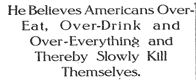
Excess for thought

My thanks to longtime friend, Doug Walker, for making me aware of a Slate article by David Friedman, discussing his project SundayMagazine.org, in which he posts “the most interesting articles from the New York Times Sunday Magazine from exactly 100 years ago, with a little bit of commentary or context.”

I would love to know what the fellow mentioned above from 100 years ago would make of the overeating and excess of today.

Sports Illustrated: Richard Deitsch’s Media Awards for 2010

News junkie that I am, I cannot believe I missed this until today. Go read Richard Deitsch’s Media Awards for 2010 from Sports Illustrated. This is just one of many gems:

“Longtime sports writer Dave Kindred, expressing severe criticism with the Associated Press Sports Editors after the organization awarded Mitch Albom with the Red Smith Award, the APSE’s highest honor (July 16): ‘That meant Albom had written as fact on Friday a Sunday column leading with events of Saturday that never happened. Note to journalism students: This is known as fiction. It can get you expelled.'”

History: Paul Harvey and J. Edgar Hoover

I’m grateful to Robert Feder for pointing out the Washington Post’s January 23 article on the 20-year friendship between Paul Harvey and FBI Director J. Edgar Hoover. Understandably, after gaining access to more than 1,400 pages of documents through a Freedom of Information request, many details are brought to light about the friendship. As noted in the article:

Previously confidential files show that Harvey, whodied last February at 90, enjoyed a 20-year friendship with FBI Director J. Edgar Hoover, often submitting advance copies of his radio script for comment and approval. Harvey wrote Hoover and his deputies regularly. Hoover, in turn, helped Harvey with research, suggested changes in scripts and showered the broadcaster with effusive praise.

The article is a fascinating read. But what most amazed me was the revelation that Paul Harvey, at one point back in the early 1950s, attempted to become the original Geraldo Rivera.

…He routinely hammered officials for being lax on security, in particular those in charge of the Argonne National Laboratory, which conducted nuclear testing 20 miles west of Chicago.

After wrapping up his television broadcast on the evening of Feb. 5, 1951, Harvey set out to prove his case — and make some career-enhancing headlines for himself.

Harvey guided his black Cadillac Fleetwood toward Argonne, arriving sometime past midnight. He parked in a secluded spot, tossed his overcoat onto the barbed wire topping a fence, then scampered over.

I would love to know if, in the 1980s/1990s when the biographies of Hoover started coming out, did Harvey ever report on them-or did he just steer clear of them. I’ll do a little digging and should I find something, I’ll be sure to post. In the meantime, be sure to read the Washington Post article. And by all means, bookmark Feder’s blog, as it’s a great resource for interesting items like this.
Human Interest: After Some Die, Where Does Their Stuff Go?

As most everyone has heard, the newspaper industry is slowly being cut into smaller and smaller pieces, thanks to a tough economy, market share loss to other media outlets and a dwindling advertising base. I think as the industry continues to shrink (and their budgets along with it), we will see less and less human interest stories.

So I was heartened to read this piece from today’s Los Angeles Times by Molly Hennessy-Fiske regarding estates with no heirs that are auctioned off by Los Angeles County officials.

“The Public Administrator’s Office mostly tends to those who die either very poor or very wealthy, either without heirs or with heirs locked in disputes. About half the estates the office handles are worth $30,000 or less. About a third are worth more than $100,000, including the estates of some celebrities.”

Since I was a kid, I’ve always enjoyed stories like this, where I find out a little bit about a person who I otherwise would have never known. I hope no matter what the newspaper industry evolves into in the coming years, I will still get to read articles like this.

Design: Considering Logos

Before today, I’ll be honest and admit I had never read the critical analysis of Philip Bump. But after reading his brief consideration of the past decade in logos, I will be sure to read him increasingly more going forward. One of Bump’s valid points in evaluating logos of the past is:

“The web, in essence, is the photo album brought out to show what a logo looked like in its awkward phase – and for that, it should be praised.”

I also greatly appreciate this post by Bump, because it introduced me to Logo RIP, a virtual graveyard for discarded commercial logos.

Holt & Perren on Media Industries: History, Theory and Method

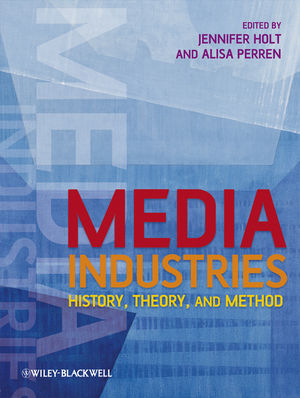
It seems like media industries are being redefined on a fairly frequent basis these days. So when I found out about the new textbook, Media Industries: History, Theory and Method, I was curious to see what ground the textbook covered. Fortunately, the editors of the textbook, Jennifer Holt (Assistant Professor of film and media studies at the University of California, Santa Barbara) and Alisa Perren (Assistant Professor in the Department of Communication at Georgia State University) were quite willing to answer my questions. In the spirit of the collaborative way that they edited the textbook, Holt and Perren collaborated on the answers. Once you’ve read the interview, be sure to also visit Professor Perren’s media industries blog. My thanks to both Holt and Perren for the interview. And if that’s not enough for you, be sure to visit Wiley’s (the publisher’s) site to download a PDF excerpt of the textbook.

Tim O’Shea: How did the idea for the textbook first come about?

Jennifer Holt/Alisa Perren: We both teach classes about the media industries and were frustrated with the lack of course materials devoted to this subject – especially materials approaching the topic from a humanistic perspective. We also saw that the study of media industries had been growing and expanding but it had not yet been mapped as a field in an academic text. So we enlisted some of the people who have done formative work in this area as well as those doing new scholarship to help us put what we saw as the emerging field of media industries into context for our readers. (To view the book’s table of contents, click here.)

O’Shea: How did you divvy up the editorial duties on the textbook?

Holt/Perren: This was truly a collaborative effort. We worked together in recruiting contributors, editing all of the essays, and writing the introduction. And amazingly, we remained friends through it all.

Continue reading Holt & Perren on Media Industries: History, Theory and Method